 financenewstimes1
What is tokenization?
Tokenisation is the process of substituting something valuable or unwieldy with a small, generic token. A credit card number becomes a random sequence of numbers. A paragraph becomes a few snippets that an AI model can understand. A skyscraper becomes digital stocks you can buy for a hundred dollars. It’s a similar process in each case: replace the original with a more secure, more manageable or more portable token. Here’s how they work, and examples of where you might encounter them.
Tokenization Defined: What Is It? Simple Explanation
‘Tokenisation’ is the process of turning it into a token that represents it. The token itself has no functionality or use. It only functions within the system that is aware of what it is representing.
Imagine a casino chip. You give the casino cash, and the casino gives you chips. The chips are valid on the casino floor, but they’re not good in the parking lot. So, the casino keeps the cash safe, and you play with chips.
The word means different things depending on the field:
- Data security: replacing sensitive data with a harmless placeholder
- AI and language models: breaking text into small units a model can process
- Finance and blockchain: turning ownership of an asset into digital tokens
What Is Tokenization? The 3 Main Types Explained
1. What Is Tokenization? in Data Security
The more prevalent usage in banking and payments. Tokenization refers to the process of replacing sensitive data, like a card number, with a randomly-generated token that bears no mathematical relationship to the original number.
You won’t show the merchant your real card number when you pay with your phone. You’ll show them a token. If a hacker steals the token, all they get is an almost-random collection of characters they can’t use anywhere else.
The actual data resides in a secure “token vault”. Only the vault can relate a token back to the original.
That’s why tokenization is a fundamental component of complying with payment security standards such as PCI DSS. With merchants lacking actual card data, there’s little to compromise.
2.What Is Tokenization? In AI Language Models
The tokenizer breaks down a piece of text into smaller parts that the model can understand or use. The smaller part that the model reads is called a token.
What a model sees: Model doesn’t read text the way we do. Instead, it maps each token (word or part of a word) to an integer and operates on these integers. Sometimes one long or uncommon word maps to several tokens, and usually a common word maps to a single token.
As a rough guide, roughly, one token is four characters of text (roughly a word and three-quarters). For example, a 1,000-word article is 1,300 tokens.
This matters for two practical reasons:
- Cost: many AI tools charge by the token.
- Limits: every model has a maximum number of tokens it can handle at once.
3.What Is Tokenization? in Asset (Blockchain)
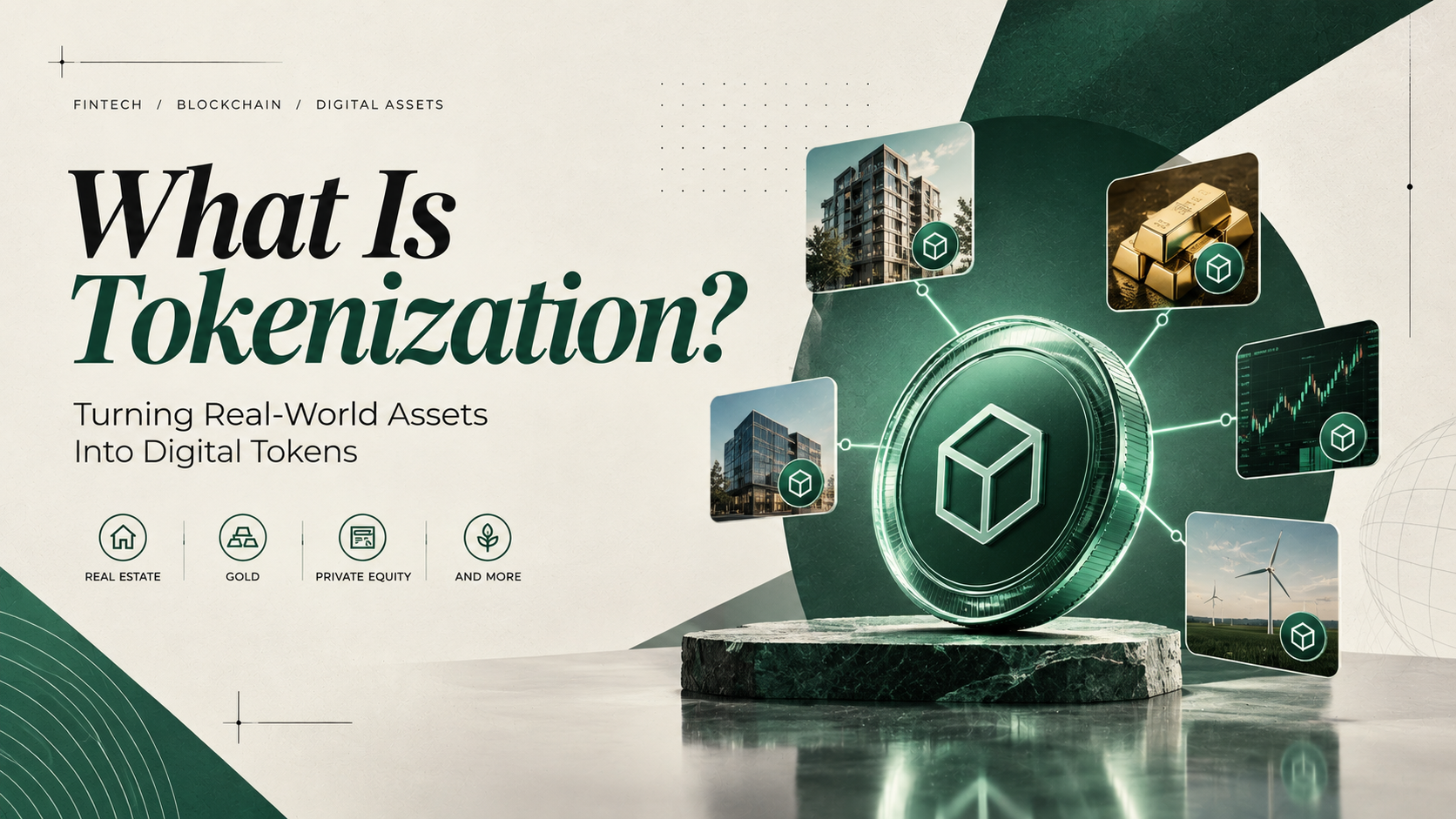
In this case, ownership of a physical asset is represented by tokens on a blockchain. They may be anything, from property or artwork, to bonds or a fund, or even private company shares.
Suppose a commercial property is valued at $5 million. The owner could distribute 50,000 tokens at $100 each, for example, allowing investors to purchase a handful of tokens. The smart contract would keep track of all the owners and be able to pay rents automatically.
The upside: fractional ownership, more rapid settlement and the chance to access assets previously reserved for large firms. In fact, so many banks and asset managers are trialling tokenized bonds and funds for these reasons.
Also Read this: 10 Stock Trading Terms You Should Know
How Does Tokenization Work Step by Step?
They vary by type, but it’s still the same pattern. Here’s the information security version, which is the simplest one to follow:
- Capture: The customer types in the card number at the point of sale.
- Replace: The system sends the number to a tokenization service, which generates a random token.
- Store: The real number is placed in a vault. The merchant stores only the token.
- Use: The merchant uses the token for refunds or repeat billing
- Detokenize: When necessary and via an authorized system, the vault looks up the token and discovers the real number to settle the payment.
It was basically, chunk the text, take each chunk, put a number to each chunk, run those numbers through the model, and then convert the numbers back into words.
Key Benefits of Tokenization
What makes this useful across so many industries? Some benefits apply to all types, others are specific to certain types. They are:
- Stronger security: A stolen token is useless without the vault. That shrinks the damage of a data breach.
- Easier compliance: Less sensitive data in your systems means fewer systems to audit and protect.
- Better access: Asset tokenization lets people invest smaller amounts in things that once required large sums.
- Faster transactions: Digital tokens can settle in minutes rather than days, because there are fewer middlemen and manual steps.
- Efficient AI: Good tokenization lets language models handle many languages and rare words without needing an endless vocabulary.
Tokenization vs. Encryption: What’s the Difference?
People often mix these up. Both protect data, but they work differently.
| Feature | Tokenization | Encryption |
| How it works | Swaps data for a random token | Scrambles data with a mathematical key |
| Can it be reversed? | Only through the vault | Yes, with the right key |
| Original data stored? | In a separate secure vault | Travels with the data, in scrambled form |
| Best for | Card numbers, IDs, stored records | Data in transit, files, messages |
The main difference: these data is recoverable for anyone who has got the key while a token has no key at all. There is no way of formula of recovery. Both are used by a lot of companies together.
Real-World Examples of Tokenization
You probably use tokenization every week without noticing:
- Mobile wallets: Apple Pay and Google Pay use tokens instead of your real card number.
- Online stores: Saved cards on shopping sites are usually stored as tokens by the payment provider.
- Chatbots and AI tools: Every message you send is split into tokens before the model answers.
- Tokenized funds and bonds: Large financial institutions have launched tokenized money market funds and treasury products on blockchains.
- Healthcare: Hospitals replace patient identifiers with tokens so researchers can analyze records without seeing personal details.
Risks and Limitations to be Aware of
Tokenization is neat but it isn’t magic.
- The attack hits home. If hackers get into your vault, they could get their hands on the real data. The limit access.
- Regulation is lagging behind. Asset tokenization prompts many questions about securities legislation, investor safety and the regulation of transactions across borders.
- No liquidity. Just because you can ‘print’ a tokenized asset doesn’t mean there will be a buyer if you want to sell.
- Bad tokenisation is really bad for AI. Not all languages and odd text work as well in models – which costs you more and reduces accuracy.
Getting Started with Tokenization
And now that you asked “what is tokenization“:
- Business owner / developer: Does your payment gateway support card tokenization? (most of the big ones do)
- AI user or builder: Use a free online tokenizer tool to test how your own text is tokenized. It’s much easier than explaining pricing and limits.
- Investor: Read everything you can about a tokenized asset and do your research. Find out who issued the token, the legal rights it grants you and where you can trade the tokenized asset.
Final Takeaway
Tokenization is when we swap out something that is sensitive, hard to understand, or hard to sell with a token – a simple, usable copy. Whether it is your card number, an AI’s ability to understand your question, or your ability to own a piece of a building, tokenization makes things safer, more straightforward, or more attainable. This is the ins and outs of tokenization.