 financenewstimes1
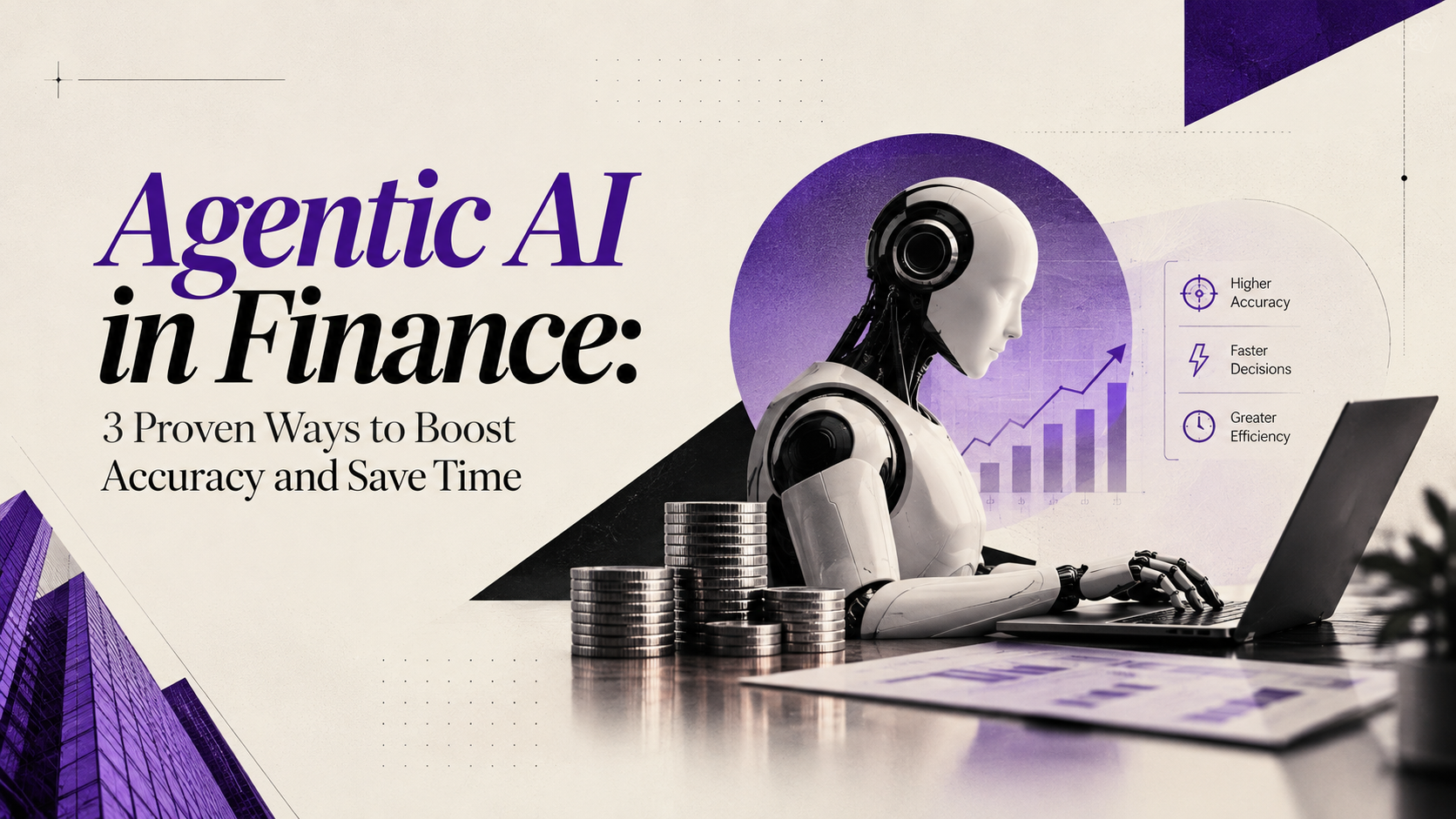
A generative AI chatbot waits until you give it a question. Agentic AI in finance does not do this. You give him a goal, like “Close the books by day 3” or “Keep 13-week cash forecast always updated,” and he plans, pulls the data, does the work, and checks his own work. That’s why finance leaders are now shifting their budgets away from legacy automation and chat assistants toward goal-driven AI agents. The chatbot responds about the close, while the agent handles the closing portion of the close himself. For CFOs who are under pressure to reduce time without increasing staff, this change makes more sense than any model benchmark.
When does Agentic AI in Finance become agentic?
The real difference is the ability to work on your own within a defined scope. See the comparison of all three methods:
- Traditional RPA: Follows fixed rules. Stuck when the file format, vendor name or GL code is changed. Cannot handle exceptions.
- Generative AI chatbot: Drafts, summarizes, explains, but only when asked by a human. Every result requires someone to enter it into the system.
- Agentic AI: Breaks the goal down into smaller tasks, uses tools (ERP APIs, bank feeds, spreadsheets) and handles the entire workflow. Man only pays attention to exceptions.
Read Also This: How Artificial Intelligence Is Changing the Finance Industry
A four-step feedback loop works behind this:
- Perception: The agent reads data from ERP, subledger, bank feeds, and contracts.
- Reasoning: Decides what to do, such as which accounts to reconcile first or which variances need to be checked.
- Action: Posts an entry, requests a document, or updates a forecast through the connected system.
- Reflection: Matches results with expectations, catches mistakes, and corrects them before anyone says so.
This last step is what differentiates the agent from a simple script. Suppose the reconciliation agent found a difference of ₹10 lakh. He doesn’t just flag. He finds the cause (timing difference, foreign exchange rate, repeated invoices) and suggests a solution. In larger setups, multi-agent orchestration (multi-agent orchestration in finance) goes further: a coordinator agent distributes work to specialist agents in AP, AR, and treasury and reconciles their results.
3 Agentic AI in Finance Use Cases That Deliver Quick ROI
Frequent Reconciliation and Month-End Close
Automated financial reconciliation is a tried-and-tested way to get started. Agents mix subledgers from multiple companies every day, not waiting for the end-of-month rush. They classify each difference by reason and pass only genuine exceptions on to the accountant.
The result is a situation of continuous close and audit: the books are closed almost every day, so the official close becomes just a review. Teams adopting such models often report a 30–50% reduction in close cycles and a 60–80% reduction in manual matching hours. If your team spends 400 hours per close on reconciliation, even cutting it in half saves 200 hours per month in analysis.
Automated Cash Flow Forecasting and Scenario Modeling
A static forecast becomes obsolete the moment a customer pays late or the supplier changes prices. FP
This makes continuous scenario modeling possible. If oil rises 15% or cargo is delayed due to port closures, the agent re-runs the liquidity scenario, calculates the impact on the covenant and sends an alert to the treasurer with suggestions, such as drawing funds from the revolver line or speeding up collections from a particular customer. Instead of sitting down at the end of the week and rebuilding the model, your team gets answers before Monday’s meeting.
Audit ready compliance and KYC/AML screening
Agents are a great fit for compliance, because uniform behavior and complete records are required. Agents screen transactions and parties in real time, add context to alerts, and automatically close low-risk false alerts. Analysts look only at those matters in which a decision is necessary.
Every action the agent takes is recorded in an immutable decision log: what data it looked at, what rules or logic it applied, and what it did. Auditors don’t have to sift through screenshots and emails. Teams often reduce the time to review false alerts by half or more, and audit evidence is better than ever before.
Human-in-the-Loop Governance Framework
The biggest concern is hallucinations, i.e. AI confidently giving wrong answers. If a rogue agent posts an entry in your general ledger, the danger is real. So decide governance before deployment, not after.
Build your structure on three controls:
- Threshold based work: The agent should work below a certain limit (e.g. ₹ 40 lakh) himself and seek human approval for all cases above that. Set limits not just in terms of amount but also in terms of the category of risk.
- Limited permissions: Give the agent only as much system access as is necessary, read-only where possible. Segregation of duties also applies to software.
- Reasons for every decision are visible: Every action is accompanied by logic and source data. If the controller cannot understand within a minute why the agent did this, then that control has failed.
Start by running the agent in “suggest” mode, and move it to “execute” mode only after accuracy has been proven across several closes.
How to Prepare Your Financial Infrastructure for Autonomous AI
The real bottleneck is the quality of your data. Agentic AI in finance is only as good as the systems it connects to. If the agent deals with mismatched charts of accounts, duplicate vendor records, and scattered subledgers, it will automate your mess more quickly. Fix the foundation first, because agentic AI in finance rewards clean data and punishes messy data.
Three practical steps to the rollout:
Data testing and cleaning (Weeks 1–6): Unify master data, map company structure, and ensure your ERP and subledgers provide reliable APIs.
Pilot on a limited workflow (months 2–4): Select high volume and low risk processes, such as bank reconciliation. Run the agent in shadow mode and match its accuracy to your team.
Expand with Governance (Months 5–12): Expand to forecasting and compliance, formalize approval limits, and continuously monitor agent performance.
Only those who start first will get the edge
The leaders in the next decade will be those finance teams that not only have the best chatbot, but always up-to-date books, always fresh forecasts, always a complete audit trail, and whose people focus on making decisions rather than wrestling with data. Agentic AI in finance is the way to build such teams. Start with one workflow, get it right, and watch the profits grow.