 financenewstimes1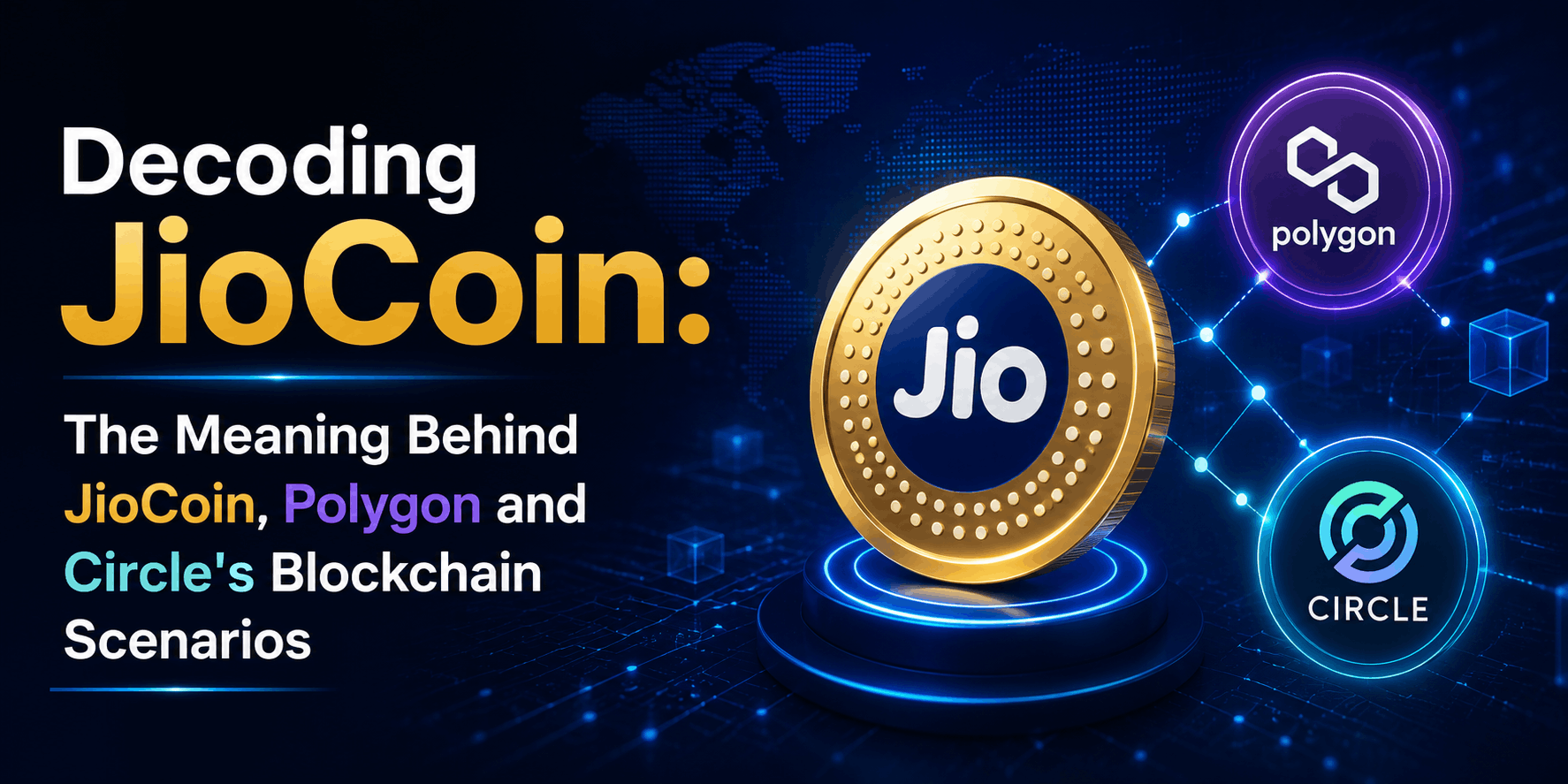
For years, a definite question has been popping in the minds of Indian crypto and blockchain enthusiasts:
What is JioCoin?
Now this question is even more perplexing after the appearance of Polygon and Circle on JioCoin-linked websites. The names may invoke thoughts about some tech partners. However, for the blockchain and digital finance community, Polygon and Circle are some of the biggest names in the blockchain game.
That leads to another question:
Why would one of the biggest companies in India collaborate with two of the biggest companies in blockchain if JioCoin is just some rewards program?
Although JioCoin is not yet an exchange-tradable crypto, the union of Reliance, Polygon and Circle offers us one of the most hyped blockchain stories in the Indian crypto market.
What is JioCoin?
JioCoin is a kind of engagement and reward token positioned within the Jio ecosystem.
It has yet to be listed as a tradable crypto on exchanges such as Binance, Coinbase and Kraken alongside Ethereum and Bitcoin.
Instead, you get your JioCoins for engaging with Jio’s services and apps.
And that is the point.
It may look at first sight as merely a local copy of Bitcoin, but in reality it is more of a blockchain-based loyalty ecosystem than a simply decentralized crypto coin for now.
But this does not mean it is a bad thing.
In fact, it is likely just the beginning of something much larger.
Does JioCoin Have an Owner?
JioCoin is owned by Jio Platforms Limited, a subsidiary of Mukesh Ambani-led Reliance Industries Limited (RIL).
Since no central entity exists behind Bitcoin, JioCoin belongs to a centralized ecosystem.
Reliance can decide:
- Whether to issue JioCoins or not.
- How token rewards are calculated.
- Which apps issue or accept the token.
- Where and how it will grow in the future.
- What partnerships it will support.
Still, this centralized approach can be its greatest strength.
Reliance already has what most blockchain projects spend years building:
- Hundreds of millions of users.
- Massive digital infrastructure.
- Retail networks.
- Financial services.
- Telecom networks.
It is no longer about acquiring users.
It is about integrating blockchain technology into that ecosystem.
Can You Buy JioCoin?
One of the most searched questions online is:
“How to buy JioCoin?”
At the time of writing, there is no official way to buy JioCoin from a public cryptocurrency exchange.
There is:
- No official ICO.
- No official token sale.
- No official exchange listing.
- No official marketplace to trade JioCoins.
JioCoin is currently designed to be earned, not bought.
Polygon: Why Experts Are Paying Attention
Polygon is not just another blockchain startup.
Founded in India as Matic Network, it has become one of the largest blockchain infrastructure projects in the world.
Polygon provides infrastructure that allows companies and developers to build blockchain-enabled applications capable of handling millions of users and transactions.
This is incredibly important for Reliance.
Imagine moving even 1% of Jio users onto blockchain infrastructure.
Most blockchains would struggle under that scale.
Polygon helps solve that challenge through:
- High throughput.
- Low cost.
- Enterprise scale.
- Ethereum compatibility.
- Infrastructure that makes mass adoption possible.
In a nutshell:
Reliance has the users.
Polygon has the technology.
Circle: The Missing Piece
Polygon supplies the blockchain infrastructure.
Circle supplies the financial infrastructure.
Circle is the company behind USDC, one of the largest and most trusted stablecoins in the world.
Unlike volatile cryptocurrencies, stablecoins are designed to maintain a relatively stable value and are increasingly used for digital payments, remittances and financial services.
Circle offers:
- Blockchain payments.
- Stablecoin infrastructure.
- Digital asset compliance.
- Enterprise financial solutions.
- Cross-border digital transactions.
A blockchain ecosystem needs two things:
- Technology.
- Financial infrastructure.
Polygon handles the technology.
Circle handles the finance.
Together, they provide many of the building blocks required for a large-scale digital asset ecosystem.
Why Polygon and Circle Matter Together
The real story may not be the coin itself.
The real story may be the infrastructure being assembled behind it.
Reliance provides:
- 450 million+ telecom users.
- JioMart.
- JioCinema.
- Jio Financial Services.
- Retail stores across India.
- Digital payment ecosystems.
Polygon provides:
- Scalable blockchain infrastructure.
- Fast transactions.
- Web3 development.
Circle provides:
- Stablecoin expertise.
- Digital financial infrastructure.
- Regulatory and compliance experience.
Together, they create the foundation for something that could be unique in India.
Could JioCoin Become India’s Bitcoin?
Probably not.
Bitcoin is decentralized money.
JioCoin appears to be part of a digital ecosystem.
JioCoin may never match Bitcoin in decentralization.
It may never match Bitcoin as a store of value.
However, if Reliance successfully integrates blockchain across telecom, retail, entertainment, payments and financial services, JioCoin could potentially reach a scale of consumer adoption that very few blockchain projects have ever achieved.
And that alone is worth paying attention to.
Final Thoughts
Today, JioCoin is not publicly tradable.
Today, it is not India’s Bitcoin.
Yet dismissing it as merely a rewards program may be a mistake.
Polygon provides world-class blockchain infrastructure.
Circle provides world-class digital financial infrastructure.
Reliance provides something neither company possesses on its own: hundreds of millions of users.
Whether JioCoin remains an internal rewards token, evolves into a blockchain-powered financial ecosystem, connects with India’s Digital Rupee, or expands into broader digital asset services will depend on regulation, technology and market demand.
One thing is clear.
This is no longer just a story about a coin.
It is a story about how one of the world’s largest digital ecosystems may be preparing for the future of blockchain, payments and digital finance in India.